Developing Independent and Effective Learners
Successful Study Strategies is a structured Sixth Form tutor programme developed to help Year 12 and Year 13 students become more independent, reflective and effective learners.
At Prince William School, we introduced Successful Study Strategies in September 2026 as a way to further develop our students on their journey towards academic excellence. The programme draws upon evidence-informed research into metacognition, self-regulated learning and effective study practices. Delivered through weekly tutor sessions, it provides students with practical strategies to manage their learning, develop productive study habits and approach academic challenges with greater confidence.
We have deliberately strived to ensure that the programme recognises that successful independent study is not simply about working harder, but about understanding how learning works and making informed decisions about how to study effectively.
Although both year groups explore similar principles, sessions are tailored to their different stages of Sixth Form education. As the more novice learners, Year 12 has focused more on establishing effective habits and adapting to the demands of post-16 study, while Year 13, as the more advanced learners, concentrates on refining existing strategies, managing revision and preparing for examinations.
The Successful Study Strategies Programme
The programme follows a carefully sequenced curriculum designed to progressively develop students’ understanding of effective learning. Through tutor sessions delivered every Tuesday morning, students explore the principles of successful independent study and consider how to apply these strategies to their own subjects, routines and academic goals.
The Year 12 and Year 13 programmes share common foundations but differ in emphasis, reflecting the changing demands of Sixth Form education.
Establishing a Shared Vision: Aims and Staff Engagement
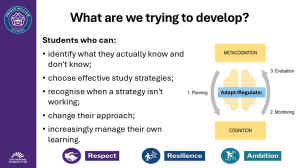
The Successful Study Strategies programme was developed with a clear ambition: to move beyond simply encouraging students to revise more, towards helping them understand how to learn effectively and independently.
At its heart, the programme aims to develop students who can accurately identify their strengths and weaknesses, select appropriate study strategies, recognise when an approach is ineffective and adapt their learning accordingly. This reflects the importance of metacognition and self-regulation in developing successful independent learners.
Securing staff engagement was an important part of implementing the programme from the outset. In September 2026, I led a Sixth Form tutor team meeting to communicate the rationale behind Successful Study Strategies, establish shared expectations and explore how tutors could reinforce its principles through their everyday interactions with students.
The meeting emphasised that successful implementation depended on more than delivering prepared materials. Tutors were encouraged to make sessions conversational and engaging, adapt activities to the needs of their groups, reinforce key terminology and strategies beyond individual sessions, and provide feedback to inform future improvements.
A further priority was establishing connections between Successful Study Strategies and the wider Sixth Form Skills for Life (Personal Development / PSHE) curriculum. By reinforcing common themes such as goal setting, metacognition, effort, organisation and deliberate practice, the intention was to provide students with consistent messages about effective learning across different aspects of their Sixth Form experience whilst also giving opportunities for reflection, evaluation and adaption.
Ultimately, this collaborative approach sought to establish a shared culture in which developing effective study habits became a collective responsibility, rather than something addressed through occasional standalone sessions.
Supporting Implementation, Monitoring and Continuous Improvement
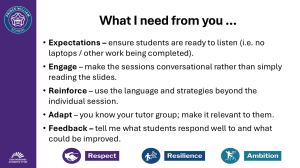
An important consideration in implementing Successful Study Strategies has been ensuring that the programme remains manageable for tutors while maintaining consistency in its delivery. To minimise additional workload, I have taken responsibility for planning and preparing the sessions, sharing materials with staff in advance to provide sufficient time for familiarisation and any adaptations they consider appropriate for their tutor groups.
Alongside this, I have undertaken informal drop-ins during tutor sessions to gain an understanding of student engagement, how effectively key messages are being communicated and how the programme is being received. These visits have been intended as supportive opportunities to observe the programme in practice, rather than formal assessments of individual staff performance.
A particularly encouraging aspect of the first term has been the quality of delivery observed across tutor groups. I have made a conscious effort to recognise and celebrate effective practice, offering positive feedback to colleagues and highlighting examples of engaging delivery. This has been an important part of developing staff confidence, recognising their contributions and encouraging continued engagement with the programme.
Staff feedback has also played an important role in reviewing implementation. Tutors have been encouraged to share their experiences, identify what students have responded well to and suggest improvements. Where appropriate, this feedback has informed adjustments to materials and delivery, helping to ensure that the programme remains practical, responsive and collaborative.
This approach has sought to balance consistency and clear expectations with professional autonomy, manageable workload and opportunities for continuous improvement.
Term 1: Establishing Effective Study Habits
The first term focused on establishing the foundations of effective independent study. Students explored how memory works, the importance of metacognition and the role of deliberate practice in developing long-term understanding.
Sessions were differentiated between Year 12 and Year 13, ensuring that students received age-appropriate guidance reflecting their academic priorities and the demands of their respective courses.
| Focus | Year 12 | Year 13 |
| Goals and aspirations | Goal setting and Sixth Form success | Vision, goals and aspirations |
| Understanding learning | Metacognition and how memory works | Metacognition and memory: review |
Effective study | Culture of error and SAAD techniques | SAAD method of learning |
| Developing independence | Organisation and study systems | Productive struggle |
| Managing study | Procrastination and habit formation | Maximising revision time |
| Applying strategies | Effective revision and practice | Revision planning for mocks |
From Research to Practice: The SAAD Framework
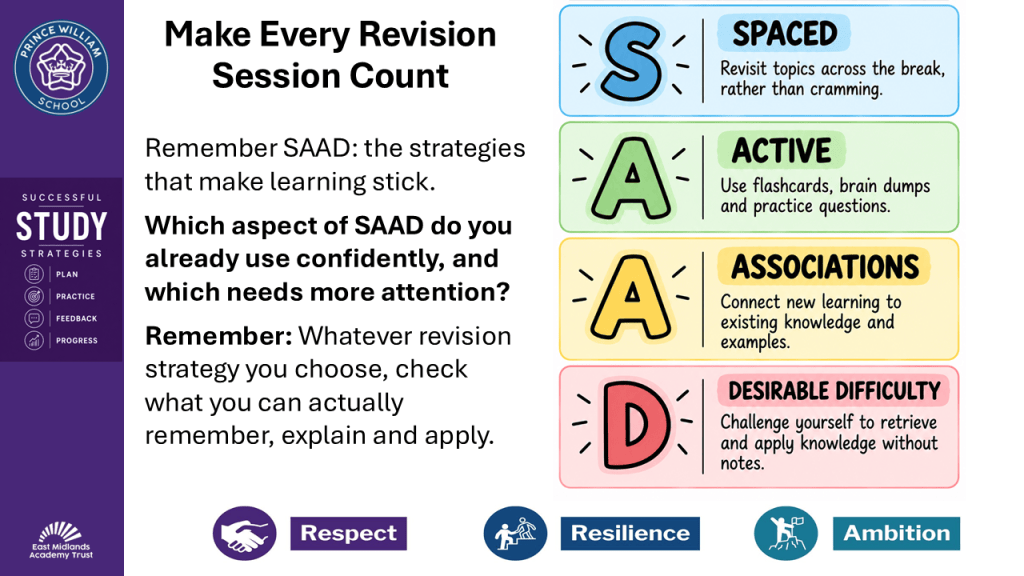
A central feature of the Successful Study Strategies programme has been the introduction and reinforcement of the SAAD framework, developed by Jade Bowler and outlined in her book The Only Study Guide You’ll Ever Need (2021).
SAAD stands for Spaced Repetition, Active Recall, Associations and Desirable Difficulty. Drawing upon principles from cognitive science, the framework provides an accessible way for students to understand what makes independent study effective.
Having encountered the framework through Bowler’s work, I incorporated it into the Successful Study Strategies programme as a practical tool for helping students evaluate and improve their approaches to learning.
Throughout Term 1, students have revisited these principles through tutor activities, reflection and opportunities to apply them to their own subjects. The emphasis has been on helping students understand not simply what strategies to use, but why they work and how to apply them independently.
Reference: Bowler, J. (2021). The Only Study Guide You’ll Ever Need. Blink Publishing.
Embedding Effective Study Strategies Through Tutor Time
Throughout Term 1, the programme has encouraged students to critically evaluate their existing study habits and apply evidence-informed strategies to their independent learning.
Through discussion, practical activities and structured reflection, students have explored misconceptions about learning, developed their metacognitive awareness and considered strategies for managing procrastination, organising resources and responding constructively to mistakes. Revisiting these principles has been central to encouraging more deliberate and sustainable study habits.
Evaluating the Programme: Term 1 Student Voice
An important part of developing the Successful Study Strategies programme has been gathering student feedback to evaluate its effectiveness and identify opportunities for improvement.
At the end of Term 1, student voice was collected to explore students’ perceptions of the programme, their understanding of effective study strategies and the extent to which they felt able to apply these approaches to their independent learning.
The findings will help inform future developments to the programme, ensuring that its content remains relevant, practical and responsive to students’ needs.
Reflection and Next Steps
The first term has focused on establishing a shared approach to effective independent learning across the Sixth Form.
Moving forward, student voice, tutor feedback and ongoing reflection will inform further refinements. A particular priority will be evaluating how effectively students transfer the strategies introduced during tutor time into their everyday independent study.

